Rackmount & Shockmount Cases Explained

March 9th, 2010

If you’re new in the industry, just curious or perhaps never got around to learning about rackmount cases then this post might be of particular interest. Rackmounts are not like normal cases and would not function properly if bought for something other than a server or electronic unit. You might notice in a rackmount case a metal track down the sides.
SKB Rackmount Case EmptyThese tracks are what hold the electronic unit in the case. Rackmount cases are great for protecting the equipment and are also great because of their portable setup. The main reason people buy rackmount cases is because the equipment can function within the case which makes perfect sense for DJ’s and Performers who are constantly on the go.
SKB Rackmount Case with Head Unit Attached
Above is an example of a SKb Rackmount Case that has an electronic head-unit mounted inside. Both the front and back of the SKB case has a takeoff lid which allows for front and rear access to the head-unit.

The second type of Rackmount case is called a Shockmount case which is a level above a rackmount in terms of protection. A shockmount case is virtually the same case as a rackmount except for one variation. The rack (where the head-unit is bolted onto), is actually suspended in the air by shocks.
SKB Shockmount Case Empty
Metaphorically speaking, a rackmount case is like a car built for driving on the highway while a shockmount case is like a car built for heavy offroading. Here’s why. The shocks which suspend the head-unit are made of rubber and can flex. During heavy duty shipping or rough transportation energy from hard jolts and hits are absorbed by the shock rather than transferred to the electronic unit. The concept is similar to how an offroad car has suspension to absorb the terrain so energy isn’t passed to the driver or the rest of the vehicle.
SKB Shockmount Case with Electronic Unit

Custom Foam Inserts are as Easy as Tracing

January 5th, 2010

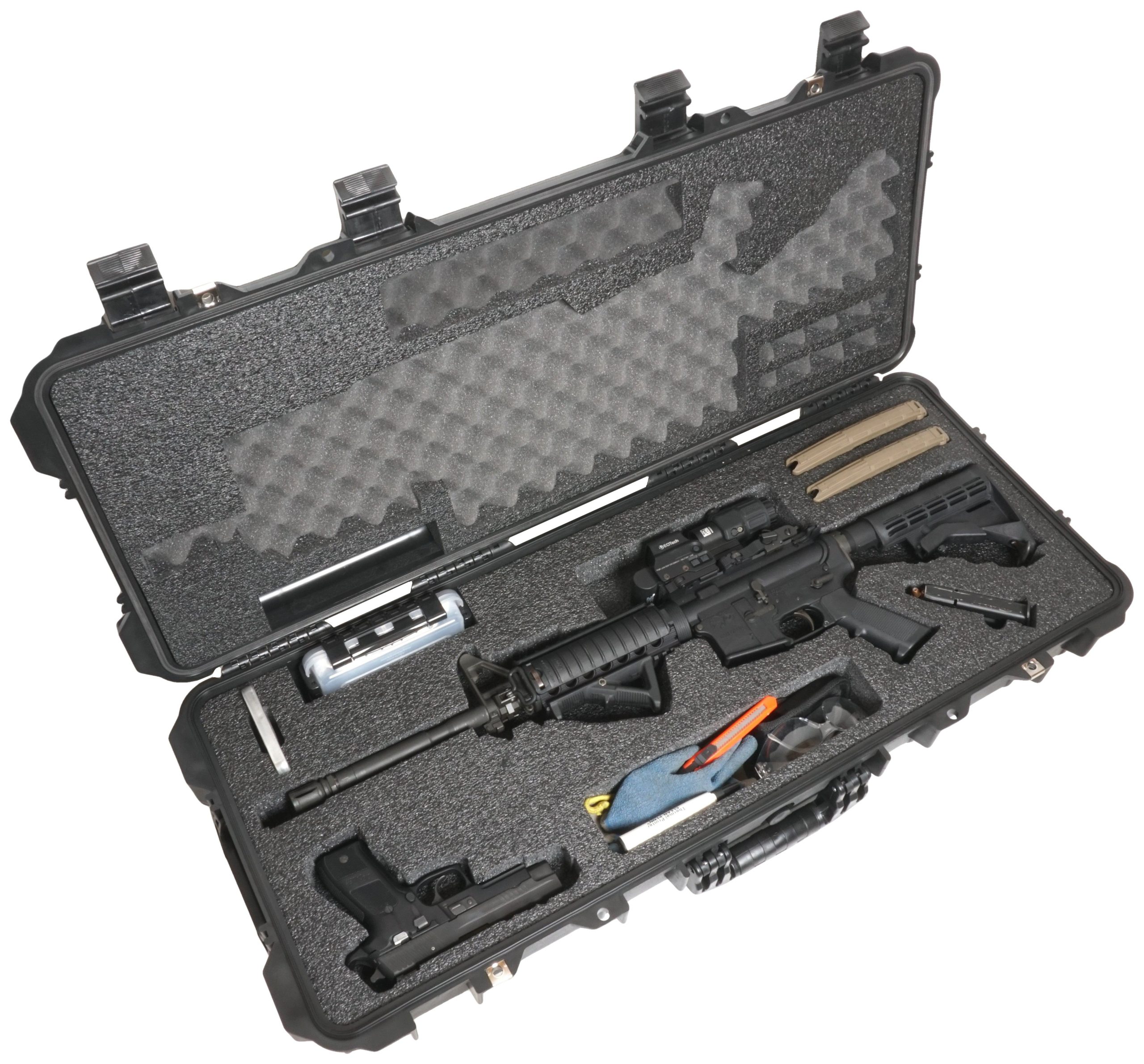
People often avoid custom inserts because of the anticipated hassle of putting it all together. In the past custom foam inserts took complex drawings and sophisticated planning. Even modern companies today make custom foam inserts such a hassle. Case Club however has defined foam cutting so precisely, that the production of custom foam is as easy as tracing parts. Case Club is the only company that offers the following program. We encourage people to trace their parts and send in the tracings which will be cut to 1/16 of an inch on the lines. You can literally lay out your parts on a piece of paper, take a pencil and trace each one. Write in the depth of the cavity and that’s it. In about a week of us receiving the drawing a custom foam insert will be on its way to your place. This eliminates knowing sophisticated C.A.D. software and time consuming measurements allowing anyone to create custom foam.

Please Note: Case Club still accepts drawings, C.A.D. files and customer supplied parts if that’s the easiest solution for you or your company.

Search for a Hard Case by Dimension

December 28th, 2009

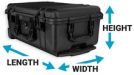
Innovation drives every industry and promotes growth. We are constantly looking for opportunities to grow and help customers find the solutions they’re looking for. Recently we launched an advancement to our website which will save you time therefore saving money. We call it the “Dimension Search.” Unlike any other tool in the case industry it’s a search engine that allows you to search for a protector case by its’ dimension. It will search every case we offer and present you with results that match exactly what you need. No longer do you have to go through every page of a website to find the perfect size case. Just enter the Length, Width, and Depth of the case size you require and set a margin. The margin is the amount of inches that each measurement can vary. Enter 1.00″ to show all cases within an inch of your search. Enter a larger margin to widen your results.
This search will go through all case lines including Pelican Cases and SKB Cases to name a few.  Try it out below. Start with a tight margin first and broaden your search using larger margins.

x

x